 Photo: Pulperia Can Lampazas
10 Best Restaurants for Octopus in Barcelona
Introduction
The Barcelona Octopus List We Send to Friends
This is the list I send when someone asks where to get proper octopus in Barcelona. Not the rubbery, reheated stuff that shows up on tourist menus near the Ramblas, but the real thing: pulpo a feira pulled from a copper cauldron and dressed with pimenton and coarse salt, or a fat tentacle finished over charcoal until the edges char. Barcelona isn't Galicia, but it has a serious Galician diaspora, and that means a handful of genuine pulperias where a maestro pulpeiro has been boiling octopus the same way for decades. My top picks lean toward those specialists, because when octopus is the whole point, you want a kitchen that treats it that way. There are also a couple of modern spots doing clever grilled versions worth your time. Expect to pay roughly 12 to 25 euros for a ration of octopus at a pulperia, more for a full a feira plate at a marisqueria.
Before you order
A Guide to Octopus in Barcelona
What is pulpo a feira and how is it different from pulpo a la gallega?
Pulpo a feira (also called pulpo a la gallega) is the Galician classic: octopus traditionally boiled in a copper cauldron, sliced into coins with scissors, and dressed with olive oil, coarse salt, and pimenton, sweet, hot, or a mix. It's served on a round wooden plate, often over cachelos, which are boiled potatoes. The technique matters more than it looks. A good pulpeiro 'scares' the octopus by dipping it into the boiling water a few times before letting it cook, which helps the skin hold together and the texture stay tender rather than chewy. When you see 'a la gallega' and 'a feira' on the same menu, they usually mean the same dish.
What's the other main style, pulpo a la brasa?
The second style you'll find around Barcelona is pulpo a la brasa, grilled octopus. The tentacle is usually pre-cooked first, traditionally boiled or, in modern kitchens, cooked low and slow, then finished over charcoal or a grill so the outside chars and crisps while the inside stays soft. It's plated more freely than the pulperia version: over potato cream or parmentier, with aioli, with a touch of paprika oil, sometimes with peppers. This is the version you'll see at tapas bars and modern bistros rather than the old Galician houses. Both styles are legitimate. The a feira plate is about tradition and product; the a la brasa version is about texture and char.
How do you spot good octopus from bad in Barcelona?
The biggest tell is texture. Properly cooked octopus is tender with a slight bite, never rubbery and never mushy. At a real pulperia you'll often see the copper cauldron, and the octopus is sliced to order rather than sitting pre-cut under a heat lamp. A good a feira plate has visible olive oil pooling around the coins, a generous dusting of pimenton, and flaky coarse salt you can see. Be wary of anywhere serving suspiciously cheap octopus on a photo menu in the heavy tourist zones, the same rule that applies to paella applies here. The specialists on this list are Galician houses where octopus is the reason they exist, which is the single best signal you can follow.
How We Built This List
Years of Eating, Asking, and Going Back
This list is built around one question: who in Barcelona actually specialises in octopus? I leaned on the Galician pulperias where pulpo is the whole identity, the ones with a maestro pulpeiro and a copper cauldron, and ranked them ahead of broader seafood houses that happen to do a good octopus on the side. Then I cross-checked against the local food press and the spots that come up again and again when people who eat a lot of pulpo talk about where they go. A pure pulperia with deep octopus specialism sits above a great marisqueria, because when the dish is the point, the specialist wins. No restaurant pays for placement, and Guidavera has no affiliate or sponsorship deals with anywhere on this list.
More on how we rank: our methodology and quality standards.
At a glance
The 10 Best Octopus Restaurants, Compared
Quick reference table. Click any name to jump to the full review.
| # | Restaurant | Neighbourhood | Price | Distinction | Signature dish |
|---|---|---|---|---|---|
| 1 | Pulperia Can Lampazas | el Poble Sec | €€ | — | Pulpo a feira |
| 2 | O'Retorno | l'Antiga Esquerra de l'Eixample | €€ | — | Pulpo con cachelos |
| 3 | A Gudiña | Sant Antoni | €€ | — | Pulpo a la gallega |
| 4 | Arume | el Raval | €€ | — | Crispy octopus with potato and yuzu foam |
| 5 | Cañota | el Poble Sec | €€ | Repsol Solete | Galician octopus |
| 6 | Carballeira | Sant Pere, Santa Caterina i la Ribera | €€€ | — | Pulpo a feira |
| 7 | Botafumeiro | la Vila de Gràcia | €€€ | — | — |
| 8 | Restaurant Escairón | El Poble-sec | € | — | — |
| 9 | A Estrela Galega | el Baix Guinardó | €€€ | — | — |
| 10 | Cera 23 | el Raval | €€ | — | Roasted Octopus |
The ranking
10 Best Octopus Restaurants in Barcelona
Pulperia Can Lampazas

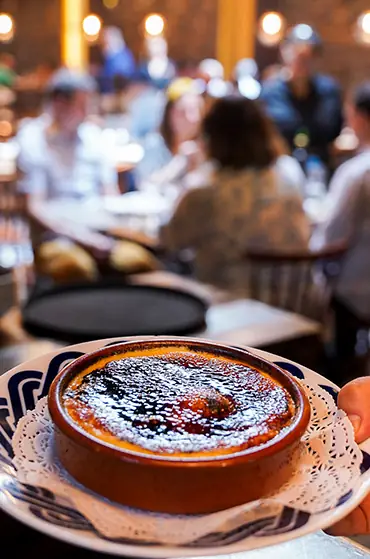
1. Pulperia Can Lampazas — Copper-cauldron pulperia with a dedicated maestro pulpeiro
If you want the most committed octopus in Barcelona, start here. Can Lampazas on Avinguda del Paral-lel is a proper Galician pulperia where the pulpo a feira is cooked in a copper caldeiro by a maestro pulpeiro, Enrique Arango, which is exactly the setup you'd hope for. Octopus isn't a side act on a sprawling menu, it's the headline, served the traditional way and sliced to order. The kitchen rounds things out with rubia gallega beef and wild Galician fish grilled over oak charcoal, plus lacon, oreja a la gallega, and a pudin de centollo, but the reason to book is the pulpo. The room is unfussy and the prices are honest for the quality. This is the closest thing to eating octopus in Galicia without leaving the city.
 O'Retorno


2. O'Retorno — The most-cited Galician octopus name in the city
O'Retorno is the Galician house that comes up most often when people talk octopus in Barcelona, and it's earned that. The Comte d'Urgell room is part of a small Galician group that's been around for years, and the kitchen runs on Gallega cooking with seasonal product. The dish to get is the pulpo con cachelos, octopus over boiled potatoes done the classic way, and it's generous enough that you can order it by the half or quarter portion if you're not committing to a whole. A lot of the menu comes off the brasa, so it pairs naturally with grilled meats if you're feeding a table. It's the kind of dependable, no-nonsense Galician spot that locals keep going back to, which is the best endorsement a pulpo place can get.
 A Gudiña
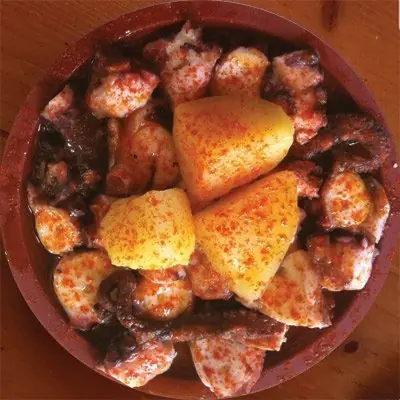
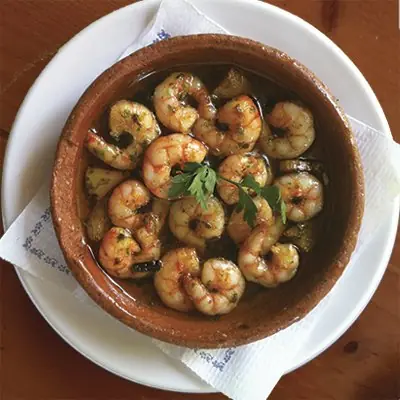
3. A Gudiña — Sant Antoni pulperia specialist since 1993
A Gudiña has been doing Galician octopus on Carrer d'Entenca in Sant Antoni since 1993, and that longevity shows in how settled the cooking feels. The pulpo a la gallega is the anchor, available in portions so you can size it to your appetite, and it sits on a menu thick with the rest of the Galician canon: percebes, navajas, berberechos, chipirones, plus mainland dishes like lacon con grelos, caldo gallego, and empanada. Finish with tarta de Santiago if you've got room. It's a marisqueria-leaning pulperia rather than a stripped-back octopus-only counter, but the pulpo is the dish people order first and the one the place is known for. Reliable, long-running, and properly Galician.
 Arume
Arume


4. Arume — Modern Galician kitchen with a creative octopus
Arume in El Raval is where the octopus goes contemporary. Chef Manu Nunez runs a compact, creative Galician menu, and the octopus shows up two ways worth ordering: a crispy octopus with potato and a yuzu foam, and a creamy rice with octopus and shrimp for when you want something soupier. This is a different register from the copper-cauldron pulperias, more plated, more technique-forward, but it's grounded in real Galician cooking rather than novelty. The room is small and intimate, which suits the style. Come here when you want octopus treated as a modern dish rather than a tradition, and pair it with one of the rice dishes the kitchen does particularly well.
 Cañota


5. Cañota — Galician-accented tapas from the Iglesias family
Canota in Poble Sec is the more boisterous, tapas-driven way to eat octopus. Run by the Iglesias brothers, the same Galician family behind some of the city's serious seafood addresses, it serves a broad Spanish tapas menu with a clear Galician accent, and the Galician octopus is one of the most-ordered plates in the room. It comes alongside Cantabric anchovies, Andalusian-style fried squid, Iberian ham, and a run of rice dishes, so it's a great spot if your table wants octopus plus a dozen other things to share. The energy is loud and convivial rather than reverent, but the pulpo holds its own. The kitchen also carries a Repsol Solete.
 Carballeira


6. Carballeira — Classic Born marisqueria with octopus three ways
Carballeira is the old-school Galician marisqueria in El Born, and it gives you more octopus options than almost anywhere on this list. There's the traditional pulpo a feira, available full or half, plus a grilled tentacle with Padron peppers and a carpaccio with potato parmentier if you want to see what the kitchen does beyond the classic. The rest of the menu is unapologetically Galician and built on the sea: percebes from the Costa da Morte, wild rodaballo, a tortilla de Betanzos that's among the best versions in the city. It's a proper sit-down marisqueria rather than a casual counter, so prices climb, but the product is the reason you're here and the octopus is treated with care.
 Botafumeiro


7. Botafumeiro — Gracia's grand Galician seafood institution since 1975
Botafumeiro has been Barcelona's grand Galician seafood institution on Gran de Gracia since 1975, and it's where octopus comes as part of a much bigger marisco occasion. This is a marisqueria rather than a pulperia, a long seafood bar running the length of the room, shellfish and crustaceans selected daily from Galician and Catalan ports, and a kitchen that keeps things classic: marisco natural or a la plancha, fish over holm-oak coals, seafood rices. The octopus sits within that broader Galician seafood offering rather than being the single headline, which is why it lands here rather than at the top of a pure-pulpo ranking. But if you want the full, generous, old-Barcelona seafood experience with octopus in the mix, this is the room for it. Book ahead.
 Restaurant Escairón


8. Restaurant Escairón — Poble Sec Galician spot where octopus is a standout
Escairon is the neighbourhood Galician option in Poble Sec, an old-school room with wood accents doing robust seafood and grilled meats without any fuss. The cooking is the food of Spain's northwest coast, which means seafood front and centre, and the Galician octopus is one of the dishes the place is known for. It's open for lunch and dinner, takes reservations, and works well for groups, with weekday and weekend set menus that make it an easy midday stop. This is less a destination pulperia and more the kind of solid, unpretentious Galician spot you'd want in your own neighbourhood, which is exactly why it earns a place. Come for honest octopus in a relaxed room.
 A Estrela Galega


9. A Estrela Galega — Tiny family marisqueria with no printed menu
A Estrela Galega is a small family-run marisqueria in el Baix Guinardo that works without a printed menu, the staff recite the day's catch each service, which is always a good sign. The selection is driven by the morning market and centred on Galician seafood, with octopus among the dishes diners single out alongside razor clams, baby squid, turbot, and shellfish like spider crab and lobster. The cooking is straightforward by design, letting the quality of the product do the talking rather than dressing it up. It's a little out of the central tourist orbit near the Sagrada Familia side of the city, which keeps it feeling like a genuine local find. Go when you want octopus as part of a fresh, market-led seafood meal.
 Cera 23


10. Cera 23 — Modern Raval kitchen with a charred roasted octopus
Cera 23 in El Raval is the modern, going-out way to end this list. The kitchen does creative Mediterranean with Spanish influences, and its roasted octopus is one of the dishes people keep coming back for, charred and plated in the contemporary style rather than the pulperia tradition. It sits on a menu built around the house ceraviche de corvina, a flame-seared sea bass tataki, and a paella de marisco gallego, with a long-running cheesecake closing most tables. There's a full cocktail programme that's a real draw, so this is as much a fun night out as a dinner. Book ahead, it's popular and the room is small. Come here for octopus with charcoal char and a drink in hand.
Also worth trying
Honourable Mentions

A'Palloza Restaurant
l'Antiga Esquerra de l'Eixample
Galician house serving pulpo con cachelos by the full, half, or quarter portion alongside mariscadas and Galician beef.

Cerveceria Braseria Gallega
l'Antiga Esquerra de l'Eixample
Long-running Galician braseria, going since 1997, where pulpo a feira sits among grilled Galician classics and oysters.

La Mundana
Sants
Sants modern bistro doing a pork belly and octopus skewer with smoked celery puree, the creative grilled-octopus end of the spectrum.
The bigger picture
The Octopus Scene in Barcelona
Octopus in Barcelona is mostly a Galician story. The city's Galician community brought the pulperia tradition with it, and a cluster of these houses now sits across Sant Antoni, Poble Sec, and the Eixample, where copper cauldrons and pulpo a feira on wooden plates are the standard. Alongside them, marisquerias in Gracia and El Born put octopus on broad seafood menus, and a newer wave of modern kitchens in El Raval and Sants grill the tentacle over charcoal and plate it with potato cream or aioli. There's no Michelin or Repsol Sol octopus credential to chase here, pulperias are humble by design, so the best signal is specialist reputation and how seriously a kitchen treats the dish.
When it's in season
Octopus peaks September–December
Mediterranean and Atlantic octopus, quality and availability peak through autumn. The classic pulpo a la gallega + Catalan grilled-on-the-brasa preparations dominate the season.
Origin: Catalonia and Galicia. See what else is in season in Barcelona.
Know the terms
Glossary
The vocabulary you need to order octopus in Barcelona like a local.
- Pulpo a feira
- The Galician octopus classic: octopus traditionally boiled in a copper cauldron, sliced into coins, and dressed with olive oil, coarse salt, and pimenton, served on a wooden plate. Also known as pulpo a la gallega.
- Pulpo a la brasa
- Grilled octopus. The tentacle is pre-cooked then finished over charcoal or a grill so the outside chars while the inside stays soft, usually plated modern over potato cream or with aioli.
- Pulperia
- A Galician restaurant that specialises in octopus, traditionally cooked in a copper cauldron. Octopus is the central dish rather than one item among many.
- Maestro pulpeiro
- A specialist cook trained in the Galician technique of preparing octopus, from the boil and the dipping of the tentacle to the final dressing with pimenton and salt.
- Cachelos
- Boiled potatoes, often served under or alongside pulpo a feira in the Galician tradition, soaking up the olive oil and pimenton from the octopus.
- Pimenton
- Spanish smoked paprika, sweet or hot, dusted over pulpo a feira as one of its defining seasonings along with coarse salt and olive oil.
On the menu: Pulpo (octopus) by the numbers
199 Barcelona restaurants on Guidavera list pulpo (octopus) on their menu — drawn from the 718 venues with published menus (a floor, not a total). Beyond our picks above, here are more places that serve it.
- WindsorEixample“Octopus, fork-smoked potato and pistachios (1 piece)”
- Bardeni-CaldeniSagrada Família“Eggs Boiled with Octopus and Potato (2u)”

- Platja Ca La NuriBarceloneta“Crunchy octopus with Padrón peppers and smoked paprika aioli”
- BateaEixample“Octopus Ravioli with Smoked Eel, Kale and Suquet”
- MaymantaLes Corts“Amazonian Tiradito, sea bass, cocona and charapita tiger's milk, octopus and palm chalaquita, sweet plantain purée”
- ContrabanGothic Quarter“Grilled octopus with parmentier and rouille”
- AjíBarceloneta“Olive Octopus”
- Leña BarcelonaLes Corts“Grilled octopus with hummus and ham vinaigrette, sundried tomato and mint”
- Can BoEl Born“Crispy octopus brioche”
- La BonaiguaSant Just Desvern“Grilled octopus, crushed potatoes, salsa verde”
- Paco MeralgoEixample“Grilled octopus with spinach and Iberian pancetta veil”
- CañeteEl Raval“Spicy octopus with trinxat cabbage, potato and pork”
- Ten'sEl Born“Octopus with smoked potatoes and paprika”
- Os-Kuro Sushi Bar & RobataEixample“Octopus Sunomono”
- Casa AmàliaEixample“Cremosa de Pop, Sant Carles octopus croquette with kimchi mayo and Vera pimentón (DO Delta del Ebro) (unit)”
- La MundanaSants“Pork belly and octopus skewer with smoked celery purée”
- Azul Rooftop BarcelonetaBarceloneta“Chargrilled octopus with pico de gallo and hummus”
- Carnal SteakhouseEixample“Grilled octopus, seaweed chimichurri and herbed parmentier”
- Erre & UrrechuLes Corts“Charcoal-grilled octopus with creamy mashed potatoes and rock mussel”
- L'OlivéEixample“Grilled octopus with 'Trinxat' cabbage and mashed potato”
- AflamasLes Corts“Grilled octopus”
- Mr. PorterEixample“GRILLED OCTOPUS, JERUSALEM ARTICHOKE AND AJI AMARILLO”
- FaunaGothic Quarter“Confit octopus, cured pancetta and soy-orange sauce”
- MassimoSarrià-Sant Gervasi“Octopus salad with pickled red onion and lemon vinaigrette”
- Colmado WilmotSarrià-Sant Gervasi“Pulpo a la Gallega”
- Can RosBarceloneta“Toast with octopus, black sausage, potato purée and dry apricot dressing”
- RobataEixample“Pulpo al olivo”
- Bar ElectricitatBarceloneta“Pulpo a la Gallega (Galician-style octopus)”
- AltamarBarceloneta“Mar y montaña of octopus, seasonal mushrooms and truffle”
- El Quim de La BoqueriaEl Raval“Baby octopus”
- Cera 23El Raval“Roasted Octopus”
- Bar NuriPoblenou“Grilled octopus with mashed cabbage, potatoes and bacon”
- Bodega AmpostaSants-Montjuïc“Grilled octopus with potato and xató sauce”
- Can BonetaEixample“Sautéed octopus with cured bacon, Vera paprika, olive oil and potato parmentier (Pop saltejat amb cansalada curada, pebre vermell de la Vera, oli d'oliva i parmentier de patata)”
- NobuSants“Octopus”
- CarballeiraEl Born“Carpaccio de pulpo con parmentier de patatas”
- El XampanyetEl Born“Octopus”
- Casa PetraPedralbes“Grilled octopus with potato and slow-cooked egg”
- Can SaiaEixample“Grilled octopus with bacon”
- La Mar SaladaBarceloneta“Barceloneta bomb with octopus, brava sauce and alioli”
- LlamberEl Born“Pulpo del 'pedreru'”
- ArumeEl Raval“Crispy octopus with potato and yuzu foam”
- Cal PepEl Born“Roasted octopus”
- Jaiba MXLes Corts“Octopus ceviche”
- Grill Room-Bar ThonetGothic Quarter“Pop a la brasa amb patata i maionesa picant”
- FiligranaSants“OCTOPUS "A FEIRA" with air potato”
- Xiringuito EscribaPoblenou“Our Pica-Pica Snack Selection (for two: Cantabrian anchovies 4 fillets, Spanish potato salad with octopus, Andalusian-style squid, grilled mussels with smoked olive oil)”
- Tapas 2254Eixample“Octopus”
- La TataSant Antoni“Pulpo estilo cajún braseado con parmentier de patata al vino blanco”
- BicosEixample“Galician-style octopus (+boiled potatoes €1.50)”
- La CabreraEixample“Octopus”
- SpeakeasyEixample“Coconut and ginger octopus, Filipino-style”
- Restaurante BarcelonetaBarceloneta“Octopus, Galician style (pulpo a la gallega)”
- ArkoEixample“Wok-seared octopus with pork jowl and artichokes”
- Abasolo EtxeaSarrià-Sant Gervasi“Grilled octopus with red mojo sauce”
- Mesón Galiciael Prat de Llobregat“Pulpo a feira or grilled with romesco and alioli”
- KuraiSants“Aquanaria sea bass and octopus ceviche”
- Bar IberiaSants-Montjuïc“Charcoal-grilled octopus”
- Bar MutEixample“Pulpollo (octopus)”
- La Bodegueta d'en MiquelNou Barris“Pop (octopus)”
Showing 60 of 199, ranked by Guidavera score. 139 more list pulpo (octopus) on their menu.
See how pulpo (octopus) compares across Barcelona’s menus →Questions
Frequently Asked Questions
All restaurants on this list were independently verified as open and serving the dishes described as of .
Where is the best octopus in Barcelona?
+
Pulperia Can Lampazas on Avinguda del Paral-lel is the top pick for octopus in Barcelona. It's a dedicated Galician pulperia where pulpo a feira is cooked in a copper cauldron by a maestro pulpeiro, making it the city's most committed octopus specialist.
What is pulpo a feira?
+
Pulpo a feira is the Galician octopus classic, also called pulpo a la gallega. The octopus is traditionally boiled in a copper cauldron, sliced into coins, and dressed with olive oil, coarse salt, and pimenton, then served on a wooden plate, often over boiled potatoes called cachelos.
What is the difference between pulpo a la gallega and pulpo a la brasa?
+
Pulpo a la gallega is boiled octopus dressed with pimenton, olive oil, and coarse salt in the Galician tradition. Pulpo a la brasa is octopus that's pre-cooked then finished over charcoal or a grill so the outside chars, usually plated modern over potato cream or with aioli.
How much does a plate of octopus cost in Barcelona?
+
A ration of octopus at a Galician pulperia in Barcelona typically runs around 12 to 25 euros. A full pulpo a feira plate at a marisqueria such as Carballeira is about 24.50 euros, and modern grilled versions like the roasted octopus at Cera 23 run around 28 euros.
Where can I find traditional Galician octopus in Barcelona?
+
For traditional Galician octopus, head to a pulperia. Pulperia Can Lampazas in Poble Sec, O'Retorno in the Eixample, and A Gudina in Sant Antoni all serve pulpo a feira or a la gallega the classic way, with octopus as a main part of their identity. Can Lampazas cooks its octopus in a copper cauldron.
Where can I find modern grilled octopus in Barcelona?
+
For modern pulpo a la brasa, try Cera 23 in El Raval for its charred roasted octopus, Arume for a crispy octopus with potato and yuzu foam, or La Mundana in Sants for a pork belly and octopus skewer with smoked celery puree.
Is octopus better at a pulperia or a marisqueria in Barcelona?
+
Both work, but they differ. A pulperia like Can Lampazas or A Gudina specialises in octopus and cooks it the traditional Galician way. A marisqueria like Botafumeiro or Carballeira serves octopus within a broad seafood menu. For octopus as the main event, the specialist pulperia is the stronger choice.
What is a maestro pulpeiro?
+
A maestro pulpeiro is a specialist who cooks octopus the traditional Galician way, controlling the boil, the dipping of the tentacle, and the dressing. Pulperia Can Lampazas in Barcelona has a resident maestro pulpeiro, Enrique Arango, cooking its pulpo a feira in a copper cauldron.
What is served with pulpo a feira?
+
Pulpo a feira is traditionally served on a round wooden plate, dressed with olive oil, coarse salt, and pimenton. It's often plated over cachelos, which are boiled potatoes, and pairs well with a Galician white wine such as Albarino or Ribeiro.
Explore
Map

About the author
Justin Mota
Guidavera founder
Justin Mota is the founder of Guidavera. He has lived in Spain for over 10 years and runs a native AI agency alongside building this platform. Food has always been the way Justin connects with friends, and Guidavera started as the list he kept sending to everyone visiting Barcelona. He built it for himself and his friends first, and now hopes it can transform the way people discover great food experiences everywhere.
More about Justin→