 Photo: El Xampanyet
12 Best Restaurants Near the Picasso Museum in Barcelona
Introduction
The Barcelona Near the Picasso Museum List We Send to Friends
The Picasso Museum sits on Carrer de Montcada at numbers 15 to 23, in the heart of El Born, and that's both good news and a trap. Good news because some genuinely great Barcelona restaurants are a two-minute walk away. The trap is that Montcada is one of the most touristed streets in the city, so the block right outside the museum is lined with mediocre tourist-menu spots banking on the fact that you're hungry and don't want to walk far. This list fixes that. Every place here is quality-screened against the wider El Born scene, not just picked because it's close. A couple of the best, El Xampanyet and Bodega La Puntual, are literally on Montcada. Most of the rest are a short walk off it: Cal Pep at Plaça de les Olles, Estimar a few streets over, the natural-wine crowd at Bar Brutal. Walk the extra three minutes. It's always worth it here.
The short answer
Key Picks at a Glance
In a hurry? These are the essential picks from our full ranking below.
- Closest genuinely-good pickEl Xampanyet
On Carrer de Montcada itself, a minute from the museum, pouring house cava and serving Cantabrian anchovies.
- Most beloved tapas counterCal Pep
The legendary no-reservations seafood-tapas counter at Plaça de les Olles, about three minutes from the museum.
- Worth the short walkEstimar
Two Repsol Soles for Rafa Zafra's market seafood, the upmarket anchor a few streets from Montcada.
- Best for natural wineBar Brutal
The El Born natural-wine bar with a cellar of roughly 2,000 low-intervention references and small sharing plates.
- Best Italian nearbyMurivecchi
Neapolitan wood-fired pizza and Gragnano pasta, the neighbourhood's standout Italian.
Before you order
A Guide to Near the Picasso Museum in Barcelona
Why proximity isn't a quality signal on Carrer de Montcada
Carrer de Montcada pulls constant footfall thanks to the Picasso Museum and the medieval-palace galleries lining it, which is exactly why so many forgettable tourist-menu places cluster on the street. Closest to the museum entrance does not mean best here. The genuinely good options are mostly a two-to-seven-minute walk off Montcada, into the quieter El Born and Santa Caterina streets, where rents are lower and the kitchens are cooking for neighbours as much as visitors. The two exceptions that are both on the street and actually good, El Xampanyet and Bodega La Puntual, both sit at Montcada 22, beside the museum.
What El Born and La Ribera do well
This is one of Barcelona's densest eating neighbourhoods, and it leans hard into a few things. Tapas and pintxos done seriously, often at a marble counter rather than a table. Catalan bodega culture, meaning vermouth on tap, tinned conserves, anchovies and cured meats. Natural and low-intervention wine, which El Born helped popularise in the city. And market seafood, since the Mercat de Santa Caterina and the old port are both close. You'll also find strong Italian and Asturian cooking here. It's a tight medieval grid of narrow streets, so most of these places are small and fill up fast at peak hours.
How to plan a meal around your museum visit
The museum is busiest at midday, so a lot of visitors come out hungry around lunch. Many of the best Born spots are tapas and counter places where you can sit, order a few plates, and leave inside an hour, which suits a museum day. The sit-down seafood and Italian options need more time and, in several cases, a booking. Some of these places close between lunch and dinner or take a day off mid-week, so check hours before you go. And if you want to eat without leaving the building, the museum runs its own café-restaurant, no ticket required (more on that below).
How We Built This List
Years of Eating, Asking, and Going Back
This guide started from the proximity-specific articles about where to eat near the Picasso Museum, then ran every candidate through a quality screen against the wider El Born and La Ribera scene. Being close to the museum got a venue onto the shortlist; it didn't get it onto the final list. We cut the tourist-menu places that survive on location alone, kept only venues that hold up on their own merits, and ordered the list by a mix of historic importance, specialist reputation, and how close they actually are to the museum, with sourced walk times used wherever a source stated one. No restaurant pays for placement, and Guidavera has no affiliate or sponsorship relationships with any venue here.
More on how we rank: our methodology and quality standards.
At a glance
The 12 Best Restaurants, Compared
Quick reference table. Click any name to jump to the full review.
| # | Restaurant | Neighbourhood | Price | Distinction | Signature dish |
|---|---|---|---|---|---|
| 1 | El Xampanyet | Sant Pere, Santa Caterina i la Ribera | €€ | Repsol Solete | Mussels in escabetx sauce |
| 2 | Cal Pep | Sant Pere, Santa Caterina i la Ribera | €€€ | — | Tuna tartare |
| 3 | Bar del Pla | Sant Pere, Santa Caterina i la Ribera | €€ | Repsol Solete | Roasted meat caneloni |
| 4 | Bodega La Puntual | Sant Pere, Santa Caterina i la Ribera | €€ | Repsol Solete | Xampanyet anchovies |
| 5 | Tapeo | Sant Pere, Santa Caterina i la Ribera | €€ | — | Sausage with wild mushrooms cannelloni |
| 6 | Arcano | Sant Pere, Santa Caterina i la Ribera (El Born) | €€ | — | Angus Sirloin Steak Tartare |
| 7 | Estimar | Sant Pere, Santa Caterina i la Ribera | €€€ | 2 Repsol Soles | Roses red prawn boiled in seawater or steamed in seaweed |
| 8 | Bar Brutal | Sant Pere, Santa Caterina i la Ribera | €€ | Repsol Solete | Fresh oysters |
| 9 | Llamber | Sant Pere, Santa Caterina i la Ribera | €€ | — | Patatinas al Cabrales |
| 10 | El Chigre 1769 | Sant Pere, Santa Caterina i la Ribera | €€ | Repsol Solete | Date stuffed with chorizo, minced meat, bacon, cider sour cream, pine nuts and Roxmut (each) |
| 11 | El Passadís del Pep | Sant Pere, Santa Caterina i la Ribera | €€€ | Repsol Solete | — |
| 12 | Murivecchi | Sant Pere, Santa Caterina i la Ribera | € | — | Spaghetti alle vongole |
The ranking
12 Best Restaurants in Barcelona
El Xampanyet


1. El Xampanyet — The historic cava-and-anchovy bar on Montcada itself
If you want one good thing within a minute of the museum, this is it. El Xampanyet sits right on Carrer de Montcada, beside the Picasso Museum, and it's been a cava-and-tapas institution for generations. The move is simple: a glass of the house cava and a saucer of Cantabrian anchovies, served in that generous, almost flat plate that regulars know to order. Beyond the anchovies you've got tinned conserves done properly, tuna belly with marinated leeks, Iberian cured meats, cheeses, and a short run of warm plates from the kitchen like grilled shrimp with garlic and Santa Pau beans with little squid. It's standing-room and shoulder-to-shoulder at peak times, which is part of the charm. Around 30 EUR a head without drinks. The perfect post-museum stop.
 Cal Pep


2. Cal Pep — Barcelona's most beloved seafood-tapas counter
Cal Pep is about a three-minute walk from the museum at Plaça de les Olles, and it's the one nearly every Barcelona local points visitors toward. There's a counter, there's no reservation system, and there's no fixed menu. You sit, and Pep's team starts suggesting plates based on what came in fresh that day. That's the whole format: market shellfish and fish, cooked simply, arriving as they're ready. The classics keep showing up, the trampera omelette, fried calamari, baby clams, tuna tartare, that soupy rice with prawn tails. Expect to queue, especially early in service, because the seats are limited and the place runs on reputation. Counter spots are the experience here, not the consolation prize.
 Bar del Pla


3. Bar del Pla — Marble-bar Catalan tapas with a serious wine list
Bar del Pla sits at the top of Carrer de Montcada, a stone's throw from the museum, and it's where to go when you want tapas with a bit more thought behind them. Chef Jordi Peris cooks market-driven Catalan plates with an inventive edge and the odd Asian touch, off a menu that changes daily. The roasted-meat cannelloni and the suckling pig sandwich are the dishes regulars order without looking, alongside a beef and foie tartare and a mushroom plate with wasabi vinaigrette. The wine programme is the other reason to come: over 100 labels leaning natural, biodynamic and organic, with by-the-glass picks that rotate every couple of weeks. It's a marble-counter spot, casual but precise, and it works as well for a quick standing bite as for a sit-down lunch.
 Bodega La Puntual


4. Bodega La Puntual — On-Montcada bodega with vermouth and conserves
The other genuinely good option directly on the museum street. Bodega La Puntual is a classic Catalan bodega at Montcada 22, beside El Xampanyet, and it's built for exactly the kind of grazing you want after a museum. Vermouth service is the speciality, poured alongside cured-ham boards, anchovies on ice, tinned conserves and sharing plates. The kitchen runs deeper than a tapas bar usually does: capipota with chickpeas, trinxat with a fried egg, tuna tartare, grilled octopus, even rices with Iberian pork or butifarra and mushrooms. There's an oyster-and-wine bar right at the entrance for a quicker stop. Hours can shift, so check the day before you walk over.
 Tapeo
Tapeo


5. Tapeo — Modern market tapas on the museum street
Tapeo is right on Carrer de Montcada, a sourced two-minute walk from the museum, and it's the most contemporary of the on-street picks. Chef Dani Rueda takes classic Catalan tapas and pushes them a notch, so you get familiar things done carefully alongside more creative plates. The sausage and wild mushrooms cannelloni, the oxtail with Santa Pau beans, and the fideuà with black Catalan cuttlefish are the dishes to anchor an order around. There's range too: a sea bass ceviche with smoked aubergine and kimchi, truffled eggs with foie and mushrooms, a steak tartare, and a run of small fritters and croquettes for sharing. Tighter and a bit more polished than the old-school bars, and a reliable bet when the closest tourist spots aren't tempting.
 Arcano


6. Arcano — Charcoal-grill cooking in former 17th-century stables
Arcano is a roughly three-minute walk from the museum, set in a space that used to be 17th-century stables, all stone and arches. The cooking is Mediterranean built around fire: charcoal and a Josper oven do the heavy lifting for both meat and seafood, and that open-flame approach is the through-line on the whole menu. It reads broad, so you can graze starters like the burrata injected with arugula pesto, slow-cooked egg, scallops and an Angus sirloin steak tartare, or go straight for the grill with French rack of lamb, sweet beef cheeks, or an Argentine prime entrecote. Stone-walled, atmospheric, and a good shout when you want a proper sit-down meal rather than a counter graze near the museum.
 Estimar


7. Estimar — Two Repsol Soles for Rafa Zafra's market seafood
 Repsol
Estimar is the upmarket pick of this list and worth the few minutes' walk off Montcada. It holds two Repsol Soles, and chef Rafa Zafra builds the whole thing around pristine seafood, with the day's catch from the port of Roses laid out on a market-style stand near the entrance so picking your fish is part of the meal. The kitchen does precise open-flame grilling and a democratic take on luxury: there's a celebrated caviar sandwich, grilled Roses red prawns, turbot, percebes, and a cheesecake people come back for. This is a sit-down, book-ahead occasion rather than a quick bite, the splurge end of the neighbourhood. If you're building a whole day around the museum and want one standout meal, make it this.
 Bar Brutal

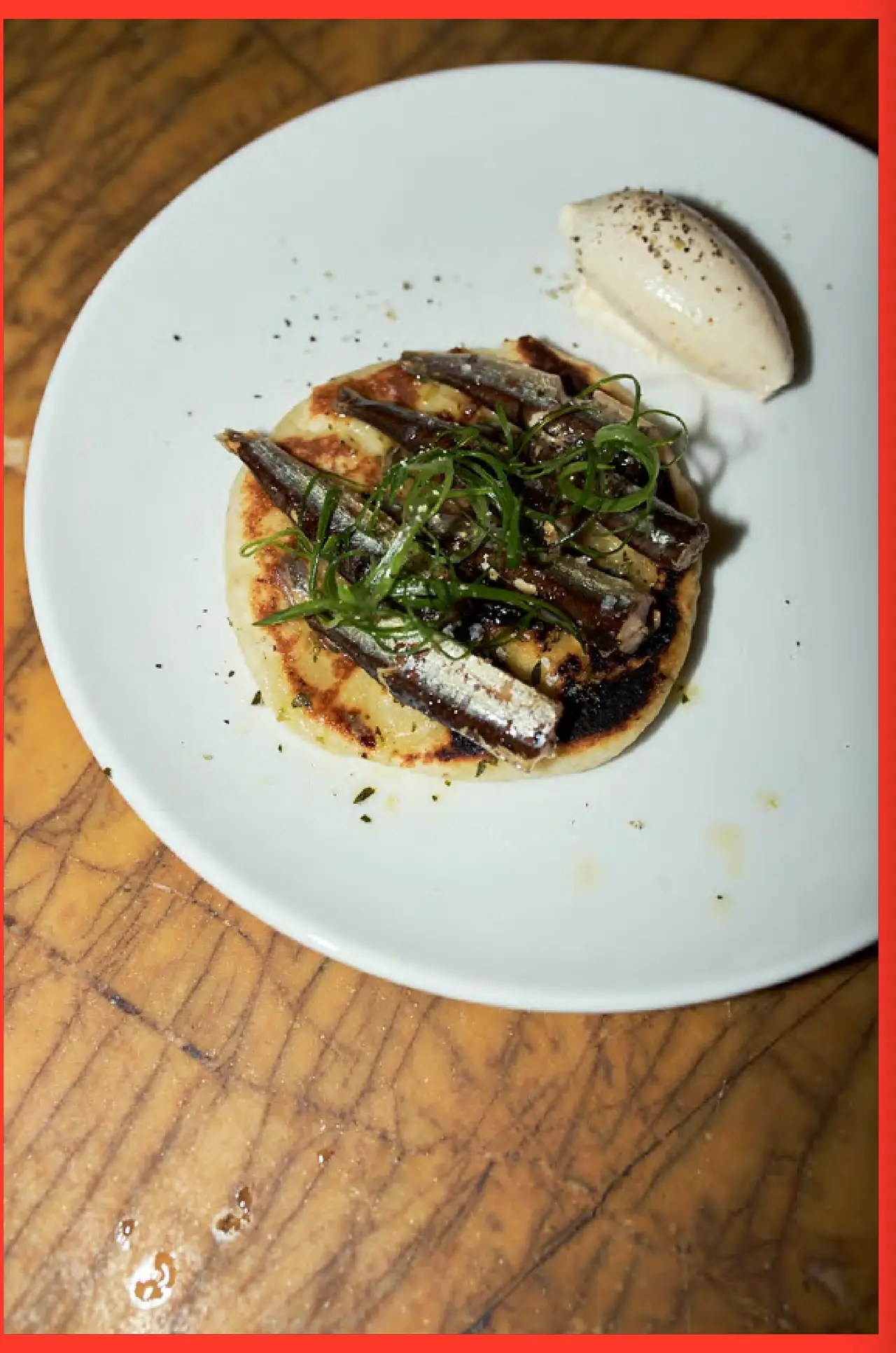
8. Bar Brutal — El Born's natural-wine bar with a 2,000-bottle cellar
Bar Brutal is a few minutes from the museum and it's the natural-wine pick of the neighbourhood. The cellar runs to roughly 2,000 references, heavily weighted toward organic, biodynamic and low-intervention producers, so this is the place to come if you want to drink something interesting and let the food follow the wine. The menu is short and rewritten often, with a Veneto accent on Mediterranean cooking: well-chosen cheeses and cold cuts, fresh oysters, marinated sardines, and a handful of warm sharing plates. There's always something for vegetarians, fish, seafood and meat eaters on the list. Buzzy, a little loose, and a different energy from the historic tapas counters. Good for an early-evening glass and a few plates before or after the museum.
 Llamber


9. Llamber — Asturian-Catalan small plates with a strong wine list
Llamber is an easy walk from the museum and brings something a little different to the Born mix: Asturian-Catalan cooking that bridges two regions. Chef Francisco Heras runs a sharing-format taberna built on small-producer ingredients, moving between traditional dishes from both regions and more contemporary plates. The signature is the patatinas with Cabrales and hazelnut praline, and you'll also find fabada asturiana, Joselito ham, an Asturian and Catalan cheese board, home-marinated salmon, and a grilled mature beef entrecote. There's a black rice and a Venere rice on the carte too. The room is more comfortable than a stand-up tapas bar, the cocktails are decent, and it punches above its casual setting. A solid all-rounder for a longer lunch or dinner.
 El Chigre 1769


10. El Chigre 1769 — Asturian sidrería meets Catalan tapas
El Chigre 1769 sits on Carrer dels Sombrerers, a Montcada side-street barely off the museum, and it's where Asturian cider-house culture meets Catalan tapas. The menu reads like a tour of both: Cantabrian anchovies, Joselito ham, Cal Tomàs cured meats from the Pyrenees, and a raw-milk Asturian cheese platter running Varé, Rey Silo, Gamonéu, Cabrales Teyedu and Geo. The kitchen does an Asturian fabada, a black rice with red prawns, grilled octopus, and a signature date stuffed with chorizo, minced meat and bacon with cider sour cream. To drink, it leans Asturian cider, vermouth and regional wines. A fun, distinctive change of pace from the more classic Catalan spots, and close enough that you can fall into it straight after the museum.
 El Passadís del Pep


11. El Passadís del Pep — No-menu market seafood through a hidden passage
Passadís del Pep is the most secretive pick here, reached through a narrow passage near Pla de Palau, a slightly longer walk on the nearby ring. There's no printed menu and no card to choose from. The waiters announce what arrived that morning and adapt the cooking to your table, so two visits never look the same. Shellfish, grilled fish, rice dishes and traditional Catalan seafood preparations are the pillars, all built around the day's product. The wine list is small and personally guided, and there are private rooms if you want a quieter corner. This is a let-go-and-trust-the-kitchen kind of meal, deeply local, and a real one if you're up for the short walk and the no-menu format.
 Murivecchi


12. Murivecchi — The neighbourhood's standout Neapolitan
When you want a break from tapas near the museum, Murivecchi is the Italian to walk to. Chef Ciro Esposito cooks southern Italian properly: Neapolitan-style wood-fired pizzas baked in about 90 seconds at 480°C on dough fermented for 72 hours, pasta sourced from Gragnano, and a few dishes served inside hollowed-out pecorino wheels for two. The pasta runs deep, from spaghetti alle vongole and paccheri with red prawns to a tagliatelle for two finished tableside, and the pizzas start as simple as a margherita. Wines come from Campania, Sicily, Tuscany and Puglia, and desserts are made in-house. Prices are gentle for the quality. A genuinely good Italian a short walk from the museum, not a tourist-trap pizzeria.
Also worth trying
Honourable Mentions

Mosquito
Sant Pere, Santa Caterina i la Ribera
Pan-Asian tapas toward the Santa Caterina market, with handmade dumplings, bao and noodles, most plates under €17. A good-value change of pace from all the Catalan cooking.

Carmina
Sant Pere, Santa Caterina i la Ribera
Italian with a strong fresh-pasta menu and a hidden speakeasy bar upstairs, around 55 EUR a head without drinks. A more dressed-up sit-down option near the museum.

Casa Delfín
El Born / La Ribera
Century-old Catalan and Mediterranean market cooking on the Passeig del Born, with seafood and paella among the sharing plates. A reliable Born classic a short walk off Montcada.
The bigger picture
The Near the Picasso Museum Scene in Barcelona
The Picasso Museum occupies five adjoining medieval palaces on Carrer de Montcada in El Born, also called La Ribera, one of the oldest and most-walked parts of Barcelona. The streets around it pack in tapas counters, Catalan bodegas, natural-wine bars, market-seafood kitchens, and a few standout Italian rooms, all within a few minutes of the museum door. The catch is that Montcada itself is heavily touristed, so the closest options are often the weakest. The genuinely good places tend to sit a short walk off the main street, toward Plaça de les Olles, the Passeig del Born, Carrer dels Sombrerers, and the Santa Caterina market.
Practical tips
Know before you go
A short survival guide for eating near the picasso museum in Barcelona— everything we wish we’d known on our first trip.
- 1
Walk a few minutes off Montcada
The block right outside the museum is the touristy part. El Xampanyet and Bodega La Puntual are the on-street exceptions; for almost everything else, walk two to seven minutes into the quieter Born streets and you'll eat a lot better for the same money or less.
- 2
Cal Pep doesn't take reservations
Cal Pep runs as a counter and famously doesn't take bookings, so expect to queue, especially at the start of service. Arrive right when it opens or be ready to wait. The counter seats are the experience, not a downgrade.
- 3
Tapas for a quick post-museum bite, sit-down for a real meal
If you're slotting lunch around the museum, the tapas counters like El Xampanyet, Tapeo and Bar del Pla get you in and out fast. For Estimar, Arcano, Carmina or Passadís del Pep, plan for a longer, sit-down meal and book ahead.
- 4
Check hours and closing days
Several Born spots close between lunch and dinner or take a mid-week day off. El Xampanyet, for example, is open Monday evenings only and Saturday lunch only, and closed all of August. Always check current hours before you walk over, especially Mondays and Tuesdays.
- 5
You can eat inside the museum
The Picasso Museum has its own café-restaurant that you can use without a museum ticket. It's the genuine 'eat without leaving the building' option if you're short on time or travelling with people who don't want a full meal out.
By neighbourhood
Near the Picasso Museum by neighbourhood
Already know where you’re eating? Here’s where to find the best near the picasso museum in each of Barcelona’s key neighbourhoods.
On Carrer de Montcada (steps from the museum)
The best things directly on the museum street are the historic cava-and-conserves bars at Montcada 22, right beside the museum. This is the rare stretch where closest and good overlap, but only at these addresses. Treat the rest of the block with suspicion.
A few minutes off Montcada (El Born core)
Walk two to seven minutes off the museum street and the quality jumps. This is where the most-cited Born tapas counters, the natural-wine bars and the standout seafood and Italian kitchens actually sit, around Plaça de les Olles, the Passeig del Born and Carrer dels Sombrerers.
The nearby ring (Santa Caterina and the port edge)
Slightly further out, toward the Santa Caterina market and Pla de Palau, you'll find a couple of places worth the longer walk, including a no-menu seafood institution reached through a hidden passage.
What's nearby
Landmarks around these restaurants
These sights sit within a short walk of most of the places on this list — handy for planning a day around the area.
Where to stay
Hotels in the area
Hotels we cover that sit within a short walk of the restaurants on this list — for staying where the eating is.
Know the terms
Glossary
The vocabulary you need to order near the picasso museum in Barcelona like a local.
- Bodega
- A traditional Catalan and Spanish bar-cellar serving vermouth, tinned conserves, cured meats and cheeses alongside wine. In El Born, bodegas like La Puntual centre on vermouth service and sharing plates rather than a full restaurant menu.
- Vermut (vermouth)
- Fortified, aromatised wine served as an aperitif, often on tap, and a cornerstone of Catalan bodega culture. 'Fer el vermut' means going out for a pre-lunch drink and a few small plates, a Sunday-morning ritual in Barcelona.
- Pintxo
- A small Basque-style snack, often served on bread or with a skewer, eaten standing at the bar. Several Born bars serve pintxos alongside Catalan tapas.
- Natural wine
- Wine made with minimal intervention, typically from organic or biodynamic grapes, with little or no added sulphites and no industrial additives. El Born helped popularise natural wine in Barcelona, with bars like Bar Brutal leading the way.
- Sidrería
- An Asturian cider house where cider is poured from a height to aerate it, served with regional cooking like fabada and cheeses. El Chigre 1769 brings the sidrería tradition to El Born, crossed with Catalan tapas.
Questions
Frequently Asked Questions
All restaurants on this list were independently verified as open and serving the dishes described as of .
Where is the Picasso Museum in Barcelona?
+
The Museu Picasso is on Carrer de Montcada, numbers 15 to 23, in El Born (also called La Ribera) in the Ciutat Vella district. It occupies five adjoining medieval palaces on one of the oldest streets in the city, a short walk from the Passeig del Born and the Santa Caterina market.
What's the best restaurant near the Picasso Museum?
+
El Xampanyet is the closest genuinely good pick, right on Carrer de Montcada beside the museum, serving house cava and Cantabrian anchovies. For a fuller sit-down meal, Estimar holds two Repsol Soles for its market seafood, and Cal Pep is the most beloved tapas counter, about three minutes away.
Can you eat inside the Picasso Museum?
+
Yes. The Museu Picasso has its own café-restaurant that you can use without buying a museum ticket. It's the easiest option if you're short on time or with people who don't want a full meal out, though most of the best food is a short walk along Carrer de Montcada.
Are restaurants on Carrer de Montcada any good?
+
Carrer de Montcada is heavily touristed because of the museum, so most spots directly outside it are mediocre tourist-menu places. The on-street exceptions are El Xampanyet and Bodega La Puntual, both at Montcada 22. For the best food, walk two to seven minutes off the main street into the quieter Born blocks.
Where can I get tapas near the Picasso Museum?
+
El Xampanyet on Carrer de Montcada is the classic cava-and-tapas bar steps from the museum. Cal Pep at Plaça de les Olles is the most famous seafood-tapas counter nearby, and Tapeo and Bar del Pla offer more modern, market-driven Catalan tapas a couple of minutes off Montcada.
Where's the best seafood near the Picasso Museum?
+
Estimar, a few minutes off Carrer de Montcada, is the upmarket choice, holding two Repsol Soles for chef Rafa Zafra's market seafood from the port of Roses. Passadís del Pep serves no-menu market seafood near Pla de Palau, and Cal Pep's counter is built around the day's fresh shellfish and fish.
Is there good Italian food near the Picasso Museum?
+
Murivecchi is the neighbourhood's standout Italian, a short walk from the museum, with Neapolitan wood-fired pizzas baked in about 90 seconds at 480°C and pasta from Gragnano. Carmina, also in El Born, runs a strong fresh-pasta menu with a speakeasy bar upstairs.
Where can I find natural wine near the Picasso Museum?
+
Bar Brutal in El Born is the natural-wine destination near the museum, with a cellar of roughly 2,000 references weighted toward organic, biodynamic and low-intervention producers, plus a short menu of sharing plates. Bar del Pla also keeps a strong natural and biodynamic wine list.
Do I need to book restaurants near the Picasso Museum?
+
For sit-down meals like Estimar, Arcano, Carmina and Passadís del Pep, booking ahead is recommended, especially at weekends. Cal Pep famously doesn't take reservations and runs as a counter, so expect to queue. Casual tapas bars are usually walk-in, though they fill up at peak hours.
What kind of food is El Born known for?
+
El Born and La Ribera, the neighbourhood around the Picasso Museum, are known for serious tapas and pintxos, Catalan bodega culture with vermouth and tinned conserves, natural and low-intervention wine, and market seafood. You'll also find strong Asturian and southern Italian cooking in the area.
Explore
Map

About the author
Justin Mota
Guidavera founder
Justin Mota is the founder of Guidavera. He has lived in Spain for over 10 years and runs a native AI agency alongside building this platform. Food has always been the way Justin connects with friends, and Guidavera started as the list he kept sending to everyone visiting Barcelona. He built it for himself and his friends first, and now hopes it can transform the way people discover great food experiences everywhere.
More about Justin→