


Chambacú
Chambacú
Chambacú is a Colombian-rooted Latin American restaurant on Carrer de Muntaner that opened in 2025. The concept splits across three spaces: El Patio (open-air courtyard), Candela (cocktail-and-street-food counter) and Memoria (the intimate tasting-menu room).
Background
About Chambacú
The Story
Chambacú opened in 2025 on Carrer de Muntaner and organises itself across three spaces: El Patio, an open courtyard facing the street; Candela, a cocktail-and-bites counter inspired by Colombian street food; and Memoria, the more intimate room where the two tasting menus are served (six courses at €55 and nine at €95). The name Chambacú comes from a historic Afro-Colombian neighbourhood in Cartagena, a signal that the kitchen is interested in the full breadth of Latin American identity, from pre-Columbian technique to West African and colonial legacies. The dining room is decorated with murals by Caracas-born artist Ivanna Gautier and with tableware from Rústic Ceràmica, and the pendant lights in Candela and Memoria are hand-woven by Ghanaian maestro Philip.
The Cuisine
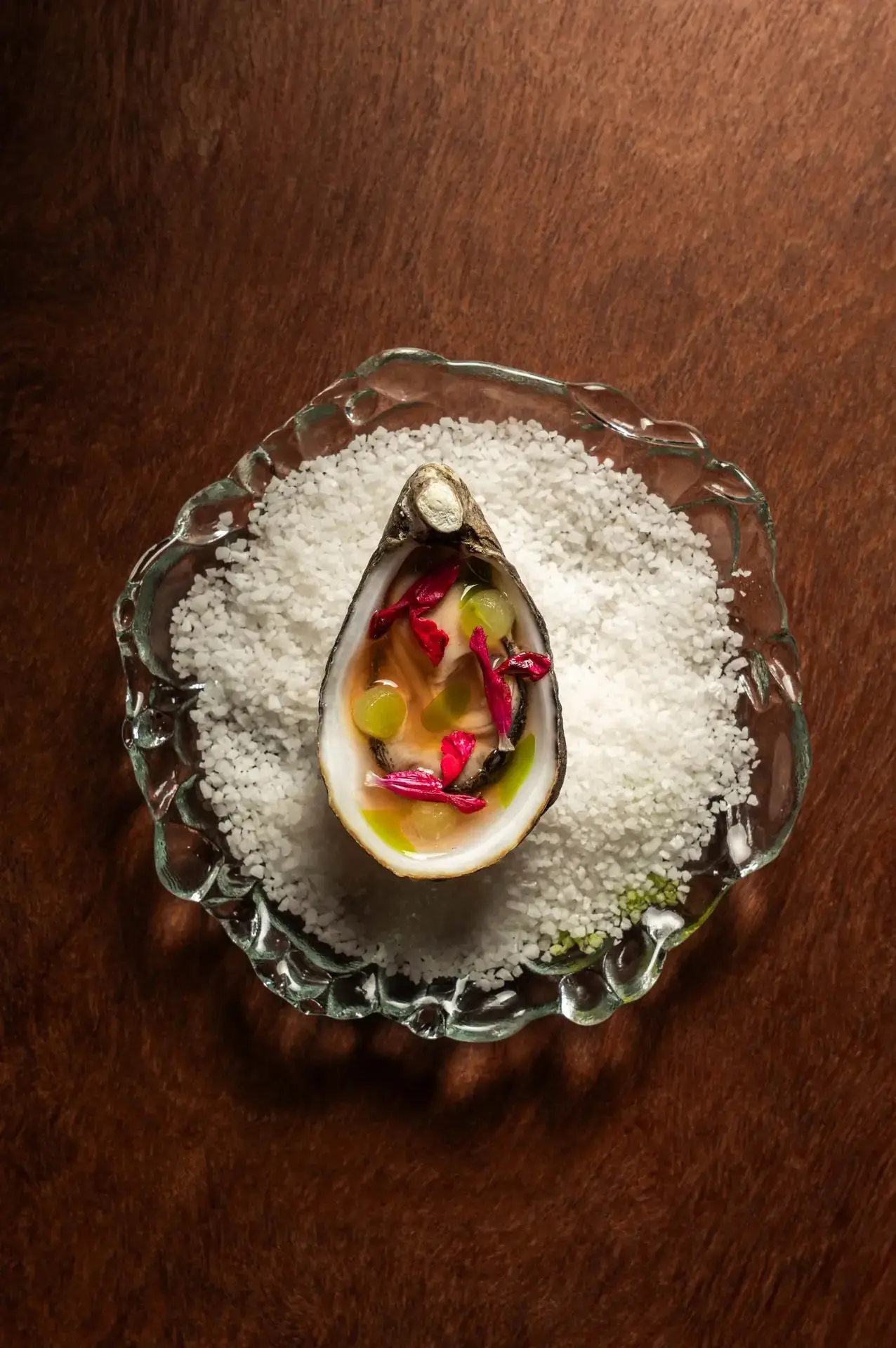
The kitchen draws on indigenous pre-Columbian techniques, West African culinary traditions carried into the colonial era, and the contemporary cooking of countries including Colombia, Peru, Mexico and Venezuela. The à la carte features ostra with aguachile ahumado, trilogía de maíz (arepa, cachapa, pupusa), chicharrón with pepitoria, tiradito de pescado, pescado a la talla with tamal and lemon emulsion, rice and peas jamaicano with grilled calamar, costilla asada with tamarind and yuca, lomo al trapo with papa criolla, and desserts such as picarones with fig-leaf ice cream. The tasting menus add sancocho de gallina, mole with tatemado avocado, hot grilled prawn ceviche, lamb with sweetbreads, and a dessert procession that includes alfajor de lúcuma, cocada, doña pepa, pan de bono and Colombian coffee.
The Chefs
Santiago Sánchez Arango (chef), Pablo Yosuke Toshio Reyes (sous-chef), Daniela Cedeño Pastrano (sommelier)
The Team
Chef Santiago Sánchez Arango, Colombian, is the creative lead and has cooked at Mugaritz and Arrea. Sous-chef Pablo Yosuke Toshio Reyes trained in Lima and at the Basque Culinary Center and has worked at Central, Boragó, Mugaritz, Nerua, Virens, Bar Cañete and Besta. Sommelier Daniela Cedeño Pastrano studied barismo and neurogastronomy in Venezuela, trained at ESHOB in Barcelona, and has worked at El Cañete and Batea. The kitchen runs the cocktail-and-street-food counter Candela and the tasting-menu room Memoria in parallel.
Highlights
What Diners Say
Consensus
Chambacú Ratings & Reviews
Professional Ratings
Tagged 'Con encanto' and 'Cocktails'. Average spend €45.
Diner Ratings
5
149 reviews
TripAdvisor
5.0
5 reviews
Yelp
5.0
4 reviews
TheFork
9.8
Chambacú ranks #262 of 1026 rated restaurants in Barcelona. Professional recognition includes Macarfi food 8.0/10. Diners rate it 5/5 on Google (149 reviews), 5.0/5 on TripAdvisor (5 reviews), 5.0/5 on Yelp (4 reviews), and 9.8/10 on TheFork.
Reservations
How to Book Chambacú
Booking
Book the six-course tasting menu (€55) or the nine-course Memoria menu (€95) through the restaurant website or by phone. The smaller Candela space for cocktails and street-food bites is more walk-in friendly. Reserve at least a week in advance for weekend tasting-menu seats.
Experience
Chambacú Dining Experience
Three spaces, three registers: El Patio is sociable and open to the street; Candela is buzzy and cocktail-led; Memoria is quieter, more focused, designed for the full tasting-menu experience. Across all three, the design favours warmth, earthy tones and considered pendant lighting over clinical minimalism, with two hand-painted murals by Ivanna Gautier anchoring the Memoria room and hand-woven lamps by Ghanaian artisan Philip overhead.
Navigate
Chambacú Location & Neighbourhood
Address
Carrer de Muntaner, 185, 08036 Barcelona, Spain
Get directions→Getting There
Chambacú sits on Carrer de Muntaner in the Esquerra de l'Eixample, a stretch of the neighbourhood known for its restaurant density and younger crowd. The Hospital Clínic metro stop (L5) is a two-minute walk, and the surrounding streets are among the most walkable in Barcelona for evening dining.
Nearby
l'Antiga Esquerra de l'Eixample is the western half of Barcelona's grid district, less touristic than the Dreta, with a dense concentration of restaurants, wine bars, and cocktail spots favoured by local food people. Carrer de Muntaner runs through the centre of it, connecting the upper Eixample to the sea.
Nearby landmarks
Landmarks within walking distance of Chambacú.


Nearby Restaurants


Where to stay nearby
Hotels we rank within walking distance of Chambacú.
Details
Chambacú Reservations, Hours & Contact
Opening Hours
| Day | Hours |
|---|---|
| Monday | Closed |
| Tuesday | 13:00–15:30 & 19:30–23:00 |
| Wednesday | 13:00–15:30 & 19:30–23:00 |
| Thursday | 13:00–15:30 & 19:30–23:00 |
| Friday | 13:00–15:30 & 19:30–23:00 |
| Saturday | 13:00–15:30 & 19:30–23:00 |
| Sunday | Closed |
Chambacú hours verified 2026-04-01. Contact the restaurant to confirm.
Contact
Recommended. Book via the restaurant website or by phone.
Good to Know
Social
From chambacu_restaurant on Instagram

· CANDELA · El mestizaje vivido en forma de bocados y cócteles. Un espacio donde el ritmo marca el paso: sabores que se comparten, se mezclan y se disfrutan sin reglas. · · · Alta cocina en Barcelona para quienes buscan algo más que comer: una experiencia gastronómica latinoamericana.

· TURÓ D'EN MOTA · Aquí el ingrediente principal no es la uva. Es el tiempo. Un Corpinnat del Penedès elaborado con mínima intervención, donde todo se construye desde la paciencia y el respeto al viñedo. Más de una década de crianza para que el vino se afine lentamente: profundidad, precisión y u

· AMASIJOS · Una técnica que nace de la yuca y del conocimiento de quienes aprendieron a transformarla. Rallar, fermentar y dar forma para convertir una raíz en alimento. En Chambacú lo llevamos a un bocado: masa, guiso y envoltura. Tradición que viaja, evoluciona y se come en un solo gesto. · · ·

· ENCOCADO · Un plato nacido en la resistencia que incorporamos a nuestro menú degustación. En la época colonial, las comunidades africanas asentadas en las costas del Pacífico recrearon su cocina ancestral con lo que tenían: coco, mariscos y fuego. El resultado fue uno de los platos más profundo

· AQUÍ NO HAY SECRETOS · Hay fuego encendido, cuchillos en movimiento y un equipo que transforma ideas en platos. En Chambacú la cocina siempre está latiendo. · · · Fine dining en Barcelona con raíces latinoamericanas: técnica, mestizaje y memoria en cada plato.

· LA PAPA · Antes de llegar al plato, viajó 8.000 años. La papa nació en los Andes, alimentó imperios y cruzó océanos. Hoy, la honramos como merece: en su forma más pura, más noble, más nuestra. Porque la alta cocina no inventa el sabor. Lo recuerda. · · · Restaurante de alta cocina en Barcelona
Questions
Chambacú FAQ
What's the difference between Chambacú's three spaces - El Patio, Candela, and Memoria?
+
El Patio is an open courtyard facing the street with outdoor seating. Candela is a cocktail-and-bites counter inspired by Colombian street food and more walk-in friendly. Memoria is the intimate dining room where the six-course (€55) and nine-course (€95) tasting menus are served.
How far in advance should I book Chambacú's tasting menus?
+
Reserve at least a week in advance for weekend tasting menu seats, as Chambacú fills quickly.
What type of Colombian cuisine does Chambacú serve?
+
Chambacú serves Latin American cuisine drawing on indigenous pre-Columbian techniques, West African culinary traditions, and contemporary cooking from Colombia, Peru, Mexico, and Venezuela.
How do I get to Chambacú on Carrer de Muntaner?
+
Take metro to Provença station (L6/L7/S1/S2) for a 9-minute walk, or Hospital Clínic (L5) for a 13-minute walk.
Can I just get cocktails and small plates at Chambacú without doing the full tasting menu?
+
Yes, the Candela space offers cocktails and Colombian street-food bites at lower price points than the tasting menus. This area is more walk-in friendly compared to the Memoria dining room where reservations are essential for the €55 and €95 tasting menus.
Why is Chambacú named after a neighborhood in Cartagena?
+
The name comes from a historic Afro-Colombian neighborhood in Cartagena, reflecting their approach of exploring the full breadth of Latin American identity from pre-Columbian roots to the present.